

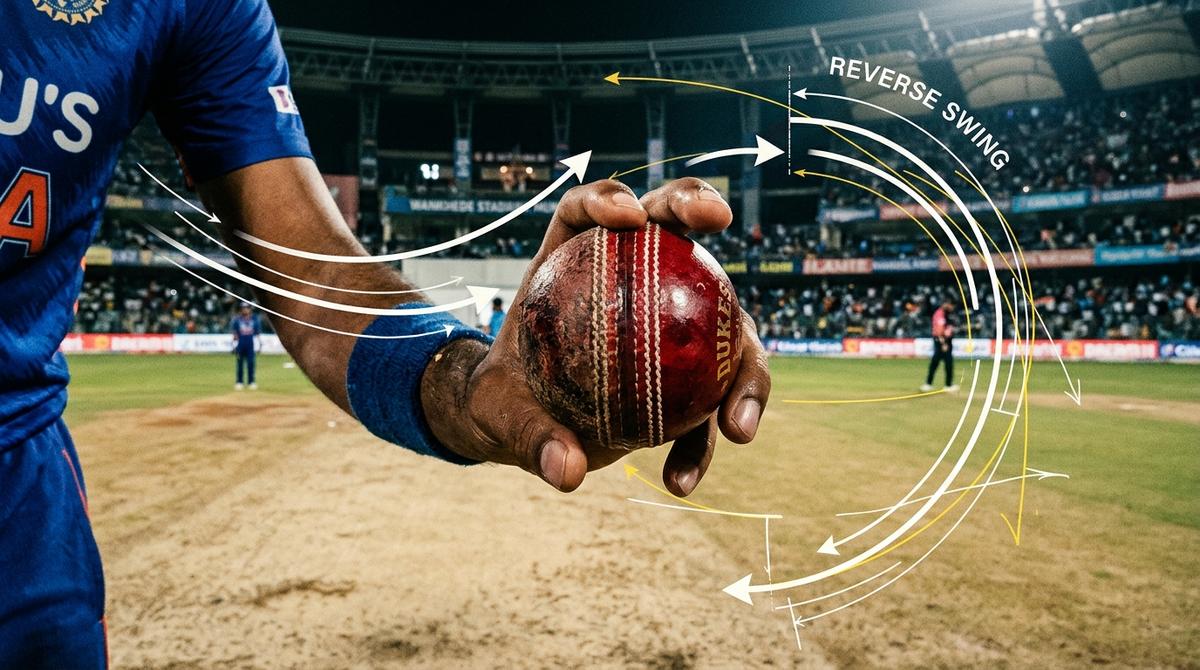
The ball, manipulated: A tactical blueprint of how artificial wear distorts the contest.
Alright, CricPaglu faithful, Captain Cool here, and it seems just when you thought the dust had settled on one of cricket's most infamous chapters, a fresh gust of wind has blown through, stirring up the past. Usman Khawaja, the ever-composed opener, has dropped a claim that sends tactical tremors right through the very foundations of team sport: the assertion that the entire Australian team was aware of the sandpaper ball-tampering incident during the 2018 Test series against South Africa.
Now, this isn't merely old news being recycled. This is a significant re-framing of the narrative surrounding an event that saw captains and vice-captains stripped of their roles and players banned. For years, the official line implied a 'leadership group' was primarily responsible. Khawaja's insight, if taken at face value, broadens the scope considerably, prompting a re-evaluation of team dynamics, collective responsibility, and the tactical dark arts that sometimes rear their ugly head in the unforgiving arena of Test cricket. It's not just about who knew; it's about what that knowledge implies for the integrity of every delivery, every fielding placement, and every strategic discussion.
The Pitch Report: Tampering's Artificial Conditions and Tactical Fallout
When we talk about pitch reports, we usually analyse how the 22 yards influence bounce, seam, and turn. But what happens when the very instrument of the game – the cricket ball – is artificially manipulated? The 2018 Cape Town incident wasn't about exploiting a turning track or a green seamer; it was about creating an unfair advantage that effectively changed the 'pitch' for the bowlers, regardless of the actual surface.
- The Science of Sandpaper: The tactical goal of using sandpaper on one side of the ball is brutally simple: accelerate natural wear and tear. By roughing up one hemisphere while keeping the other relatively smooth, the aerodynamic properties of the Kookaburra (or Dukes, or SG) are drastically altered. This asymmetrical surface creates an exaggerated pressure differential as the ball travels through the air, leading to pronounced reverse swing.
- The Unfair Advantage: Reverse swing, when genuinely achieved through natural wear, masterful wrist position, and specific seam angles, is a sublime art. It requires immense skill and patience. Artificially inducing it, however, fundamentally distorting the contest. It grants bowlers an unearned weapon, capable of devastating late movement at high pace, making even competent batsmen look like gully cricket novices. Imagine setting a field for conventional swing, only for the ball to dart in the opposite direction at 140 kph. It's a tactical nightmare, completely undermining prepared strategies and legitimate techniques.
- Undermining Strategy: A captain's primary role is to set fields, manage bowlers, and rotate spells to exploit conditions and batsman weaknesses. When the ball itself is 'enhanced' in an illegitimate way, it simplifies the bowling strategy for the exploiting team while making batting almost impossible. Fielders can be set for conventional swing, knowing the reverse will come. Bowling angles, lengths, and lines become simpler, as the ball does the 'extra work'. This isn't high-level tactical chess; it's a brute-force bypass of the game's inherent challenges.
What Does "Widespread Knowledge" Mean for Team Strategy?
Khawaja's claim of "widespread knowledge" isn't a minor detail; it's a strategic bombshell. If the entire squad knew, it elevates the incident from a 'rogue act' by a few individuals to a potential collective blind spot, or worse, a tacit acceptance within the team's strategic framework. This changes everything:
- Shared Responsibility, Shared Silence: A tactical decision, even an illegitimate one, taken with broad team awareness implies a degree of collective responsibility that transcends mere leadership. It speaks to a team culture where such actions could be considered, if not explicitly endorsed, then certainly not reported or challenged.
- Impact on Bowlers: Consider the bowlers. If they were aware, their participation (even if just benefiting from the swing) becomes ethically compromised. If unaware, it implies they were unwitting beneficiaries, potentially unaware that their exceptional spells were aided by artificial means. Either way, it casts a long shadow over their performances and tactical contributions in that Test.
- Cohesion and Trust: Post-scandal, the narrative was about moving forward. But if Khawaja is right, the fault lines of trust and integrity ran deeper than acknowledged. How does a team truly cohere and strategize when such a significant ethical breach is known by many but publicly attributed to few? It suggests a complex, perhaps even fractured, internal dynamic beneath the surface of team unity. This is the stuff of high-stakes, behind-the-scenes drama, far removed from the 'play hard, play fair' mantra.
The Wagon Wheel: Khawaja's Revelation and the Echoes of Cape Town 2018
The "Wagon Wheel" usually shows where runs are scored, but here, it maps the trajectory of a scandal's impact across careers and legacies. Usman Khawaja, as a seasoned veteran now, speaks from a position of authority and experience. His decision to finally voice this perspective isn't taken lightly and has significant ramifications for how we view that era of Australian cricket.
"We were all aware of the use of sandpaper on the ball. It wasn't just a couple of guys; it was known by the entire team." - Usman Khawaja (as per intelligence data)
- Revisiting Reputations: The immediate fallout of Sandpapergate saw Steve Smith, David Warner, and Cameron Bancroft face severe bans and intense public scrutiny. Khawaja's statement, while not diminishing their individual culpability, broadens the moral landscape. It implicitly raises questions about accountability across the squad and the broader coaching staff who, presumably, would also have been part of this "widespread knowledge."
- A Stain on Legacy: For Australian cricket, the 2018 scandal was a monumental blow to its "Spirit of Cricket" image. The team, which historically played a tough but fair brand of cricket, suddenly found itself synonymous with cheating. Khawaja's comments ensure that this particular stain continues to bleed, making it harder to simply close the book and move on. Every mention of Australian cricket from that period will now have this additional layer of strategic complexity and ethical ambiguity attached.
- The Long Shadow on Data & Performance: As a tactical analyst, one must always look at performances through the lens of conditions. If ball tampering was widespread, how do we evaluate the bowling figures and batting collapses from that particular Test and perhaps even previous matches? The data suddenly becomes tainted, introducing an asterisk that no genuine cricket purist wants to see. It’s a sad reality, arre bhai, but a necessary analytical consideration.
Ultimately, Khawaja’s candidness isn't about re-litigating individual punishments but about peeling back the layers of a complex team dynamic. It compels us to re-examine the pressures, the tactical desperation, and the collective ethical compass of a squad operating at the pinnacle of Test cricket. The echoes of Cape Town 2018 continue to reverberate, serving as a potent reminder that integrity is the ultimate pitch on which the game is truly played, and any deviation, no matter how 'widespread' the knowledge, leaves an indelible mark.
That's Captain Cool for CricPaglu, signing off. Keep your eyes on the ball, and your wits sharper than any sandpaper.