

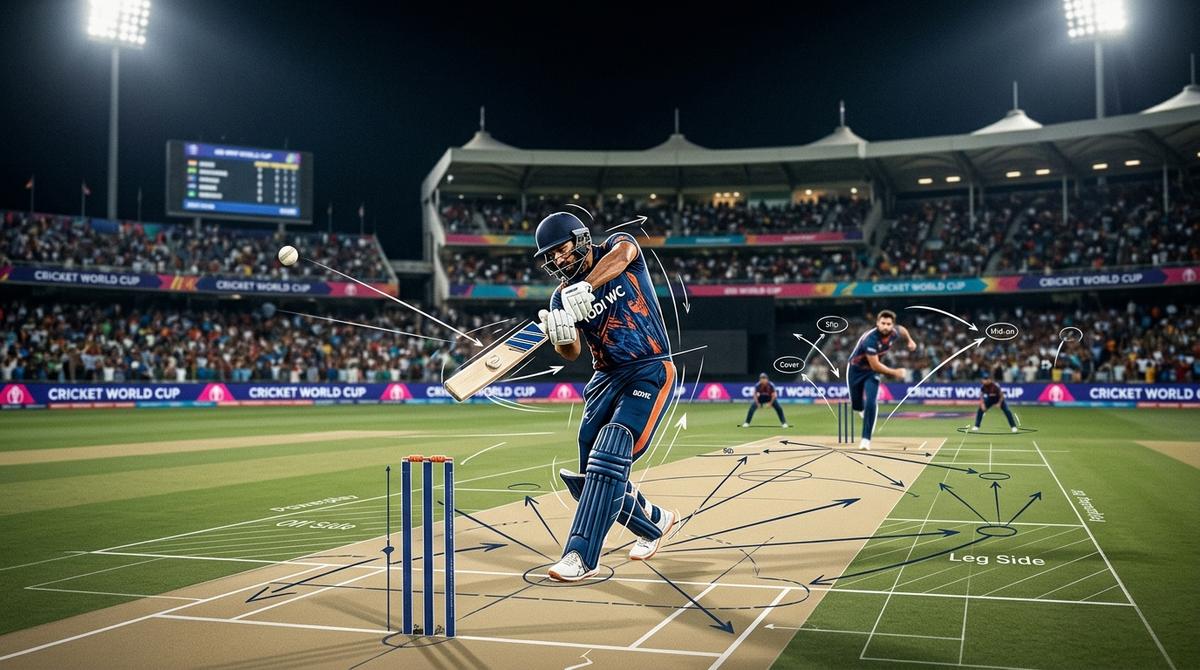
Tactical blueprint: Analyzing England & Pakistan's World Cup build-up on the flat tracks of destiny.
Alright, CricPaglu fanatics, Captain Cool here, adjusting my imaginary field placements and settling in for some cerebral cricket talk. We're on the cusp of the ODI World Cup, and the buzz is palpable. Forget the biff and bash for a moment; let's talk strategy, mindset, and the subtle art of the build-up. Our intelligence dashboard is flashing green for two familiar foes: England and Pakistan. Both are reportedly brimming with confidence, albeit from different journeys. Let's dive deep into what this means as they chart their course to cricket's biggest stage.
England, the defending champions, are taking a quiet, yet firm, confidence from their 50-over progress made over the summer. It's not always about smashing records; sometimes, it's about refining the machine, ironing out the kinks, and ensuring the gears are perfectly meshed. Pakistan, on the other hand, is buoyed by a more immediate high – a recent win against Sri Lanka. A victory, regardless of the opponent, is always a potent elixir for team morale. So, what are the tactical takeaways from these distinct confidence boosters?
The Pitch Report: Strategic Adaptations for the World Cup Gauntlet
Now, I don't have the specific pitch data for England's 'summer progress' or Pakistan's clash against Sri Lanka, so let's approach this from a World Cup tactical perspective. In a major tournament, you're going to encounter the full spectrum: a flat deck where the ball comes on nicely, offering a batting paradise; a dusty turner that brings the spinners into play; and perhaps even a green top if the conditions favour the seamers. How do these two sides, known for their contrasting styles, adapt?
England's Approach: The Batting Blueprint
England's confidence, stemming from their 'summer progress,' suggests they've been fine-tuning their white-ball blueprint. This likely involves:
- Aggressive Batting: Irrespective of the pitch, England's top order typically aims to dominate the Powerplay, setting a high run-rate tone. Even on a slightly challenging surface, their strategy often leans towards intent, trying to hit through the line. We've seen them master the art of finding boundaries in unconventional areas, often negating disciplined lengths.
- Flexible Bowling Plans: On a flat track, it's about variations – the slower ball, the off-cutter, the wide yorker. On a turning pitch, it's about buying wickets with flight and dip. England's array of all-rounders gives them options, allowing them to shift from pace-heavy to spin-dominant attacks based on the conditions. Their ability to pick up wickets in the middle overs, crucial for restricting opposition totals, often comes from a combination of field placements designed to build pressure and bowlers executing deceptive deliveries.
Pakistan's Strategy: Pace, Spin, and Clinical Finish
Pakistan's recent win against Sri Lanka is a tangible boost. Their confidence will be rooted in their distinct strengths:
- Pace Battery: Pakistan traditionally relies on its fast bowlers to make early inroads and deliver crucial spells at the death. On a pitch with any hint of pace or bounce, their quicks can be devastating, hitting hard lengths and deploying bouncers that can rattle even the best batsmen. The ability to bowl rapid, inswinging yorkers in the death overs is a trademark.
- Spin Wizardry: Their spin options, often wrist-spinners and wily off-break bowlers, thrive on dusty or worn surfaces. They can tie down the middle overs, building pressure and forcing errors. Think about a well-disguised doosra or a sharp googly creating doubt in the batsman's mind. Field placements, often a tight inner ring during these periods, are critical to maximizing this pressure.
- Batting Stability: While sometimes accused of fragility, their recent win suggests a greater stability. The focus would be on building partnerships, rotating the strike, and then accelerating in the final 10-15 overs. On a turning track, this means playing the ball late, using soft hands, and picking gaps.
Ultimately, both teams will need to be tactically astute, reading the pitch correctly at the toss, and adapting their combinations and game plans on the fly. The World Cup isn't won by a single strategy but by a flexible approach to diverse conditions.
The Wagon Wheel: Charting Trajectories and Tournament Impact
The 'Wagon Wheel' of these two teams' journeys to the World Cup reveals interesting trajectories and historical echoes.
England: The Reigning Monarch's Refinement
England's 50-over 'progress' over the summer isn't just about results; it's about reinforcing a philosophy. This current England white-ball side has rewritten the ODI playbook, much like Australia dominated in the early 2000s or the West Indies in the 70s and 80s. Their confidence comes from a settled core, a clear game plan, and a deep talent pool. This isn't just about individual player form; it's about the collective machine humming. Think of it as refining the engine of a Formula 1 car – minor tweaks here and there, ensuring peak performance for the big race. Their historical rivalries, whether it's the Ashes in Tests or their burgeoning ODI clashes with India or Australia, always push them to innovate. This summer's work is simply the next iteration of that innovation, aimed squarely at defending their title. For players, this means consistent roles, clear expectations, and the freedom to express their natural game.
Pakistan: The Resurgent Force
Pakistan's recent win against Sri Lanka, while a single data point, is significant for momentum. Pakistan cricket has always thrived on confidence and a bit of unpredictability – the 'cornered tigers' mentality, if you will, famously exemplified in 1992. This recent victory, however modest in isolation, builds belief within the squad. It validates their processes and fuels their drive. For a team that sometimes battles with consistency, any positive result can be a catalyst for a sustained run of form. This isn't like an IPL season where you can recover from a few losses; in a World Cup, every victory is gold. This win provides a psychological edge, particularly for individual players gaining valuable match practice and cementing their roles, perhaps settling tactical questions around who bowls the crucial overs or bats at specific positions.
Historically, Pakistan has always been a dangerous proposition in ICC tournaments. Their blend of explosive batting, world-class pace, and enigmatic spin can dismantle any opposition on their day. This recent confidence boost, combined with their inherent strengths, makes them a potent threat. For them, it’s about converting that belief into consistent performance, especially against fellow top-tier sides.
The World Cup Confluence
Both England and Pakistan are now in the crucial build-up phase. For England, it's about maintaining their high standards and perhaps introducing a few tactical surprises. For Pakistan, it's about harnessing this newfound momentum and building a psychological fortress. As familiar foes, their paths are often intertwined, and their respective journeys will add another fascinating layer to the upcoming World Cup narrative. The strategic battles, the field placements, the execution of the death overs – it's all going to come down to who handles the pressure best. Get ready for some high-octane cricket, folks!
Until next time, keep it cool, keep it tactical!
Captain Cool, signing off for CricPaglu.