

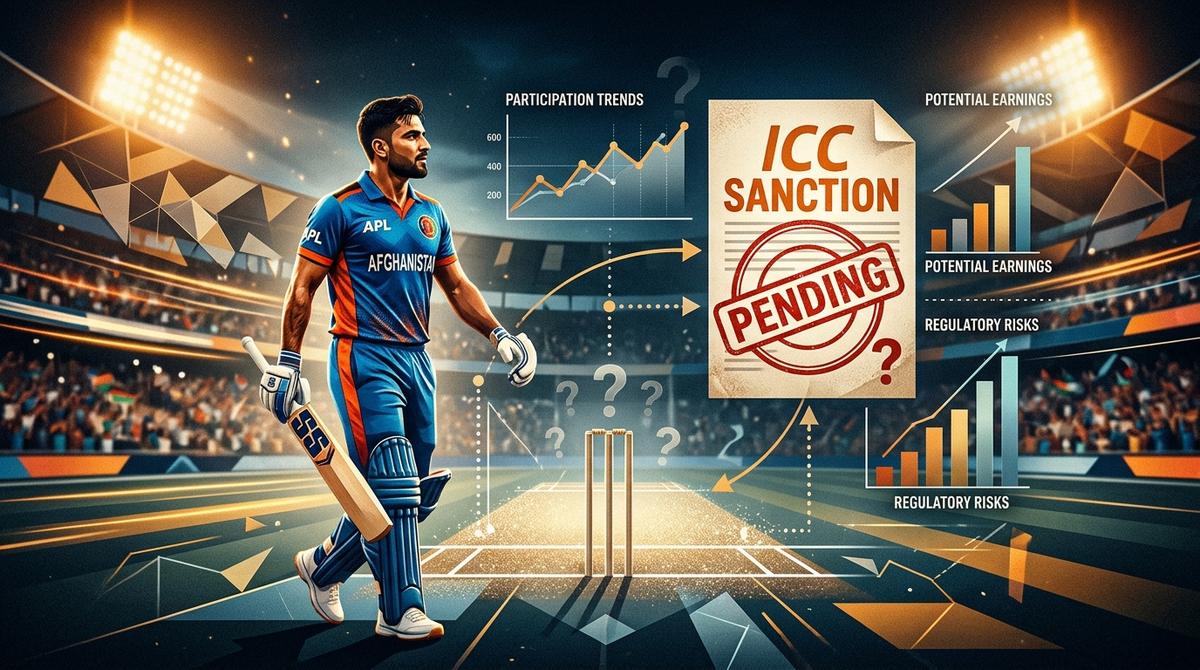
The modern T20 cricketer: Ready to conquer new frontiers, but always under the watchful, and sometimes unsanctioned, eye of the game's regulators.
Alright, CricPaglu faithful, Priya DataDevi here, back from my deep dive into the obscure corners of T20 global economics. Today, we're not talking about your bog-standard six-hitting percentages or the efficacy of a 140 kph Yorker against a part-time off-spinner in the Death Overs. No, no. We're talking about something far more intriguing: player participation, emerging leagues, and the ever-present shadow of ICC sanctioning. It's like gully cricket, but with multi-million dollar contracts and global regulatory bodies involved. Arre bhai, the drama is real!
Our data streams have flagged a rather piquant development: England's T20 stalwarts, Moeen Ali and Alex Hales, are set to feature in the inaugural Afghanistan Premier League (APL), slated to kick off on December 27. Now, on the surface, this sounds like another Tuesday in the frenetic world of franchise cricket, right? Another league, another payday, another opportunity for these gun players to showcase their skills, perhaps hit a few out of the park, and add some paisa vasool value to their personal brand. But dig a nanometer deeper, and you'll find a rather significant asterisk, one that could turn this exciting prospect into a sticky wicket for all involved: The tournament has not yet received ICC sanction.
Let that sink in. We're not talking about a delayed flight or a minor injury concern here. We're discussing the very foundation upon which professional international cricket operates. An unsanctioned league. It's like trying to play a T20 final without bails on the stumps. Possible? Technically. Legitimate? Well, that's where the data gets murky, and the tactical implications become a minefield.
The Pitch Report: Navigating the Unsanctioned Terrain
When the actual pitch report is 'null,' as is the case for this inaugural APL (because, you know, it hasn't happened yet), we must turn our analytical gaze to the metaphorical pitch – the global T20 market itself. And let me tell you, this pitch is not flat; it's a dynamic, unpredictable surface, currently characterized by significant regulatory cracks.
Why would players of Moeen Ali and Alex Hales' calibre commit to a tournament hanging in this regulatory limbo? Let's dissect the probable playstyles and motivations:
- The Early Mover Advantage: Emerging leagues, much like start-up companies, often offer attractive packages to marquee players. They need star power to gain legitimacy, secure broadcasting rights, and draw crowds. For players, this could mean better contracts than what established leagues might offer for similar roles, or at least a significant supplement to their annual earnings. It's a calculated risk-reward matrix.
- Game Time & Skill Refinement: Even without ICC sanction, these matches would offer competitive T20 action. For players like Hales, known for his aggressive Powerplay striking, or Moeen, with his all-round capabilities (spin and destructive middle-order hitting), any opportunity to sharpen their skills and maintain match fitness is valuable. The sheer volume of T20 cricket demanded by the international calendar means players are constantly seeking opportunities to play.
- Market Expansion: The Afghanistan Premier League represents a burgeoning market. Being among the first prominent international players to feature could build a lasting connection with a new fanbase, which, in the influencer age, holds significant long-term value. Think brand equity, not just match fees.
However, the lack of ICC sanction introduces a treacherous element. For the players, it could potentially lead to sanctions from their home boards or even the ICC, depending on the specifics of the non-sanction. It's a Googly that could swing late and catch you off guard. For the league, it threatens its very existence. Without ICC approval, it struggles to attract top-tier talent consistently, gain legitimacy, and integrate into the broader global cricketing calendar. It's like building a state-of-the-art stadium but forgetting to connect it to the national grid.
From a tactical perspective, this situation puts tremendous pressure on the APL organizers. They need to secure that sanction, and fast. Until then, every player involved is essentially walking a tightrope. This isn't just about bat and ball; it's about governance, player welfare, and the future landscape of T20 cricket.
The Wagon Wheel: Charting Career Trajectories Amidst Regulatory Turbulence
Let's spin the wagon wheel of career paths and historical precedents. This isn't the first time we've seen a league emerge with sanctioning issues. Remember the Indian Cricket League (ICL)? It was a watershed moment that ultimately led to the IPL. The path of innovation in cricket, particularly in the T20 format, is often littered with regulatory hurdles.
For Moeen Ali and Alex Hales, their decision to join the APL, even pre-sanction, speaks volumes about the economics of modern cricket. These aren't club players; these are established internationals. Their participation underscores several key trends:
- Player Power & Economic Drivers: The T20 franchise model has shifted significant power to the players. With numerous leagues vying for their services, players can dictate terms to a certain extent. For many, the financial rewards of franchise cricket now outweigh traditional international formats, or at least provide critical income stability.
- The Global T20 Calendar Congestion: With leagues popping up like mushrooms after a monsoon, the international cricketing calendar is bursting at the seams. This creates scheduling conflicts and, crucially, regulatory headaches for the ICC, which aims to protect bilateral international cricket and ensure fair competition.
- The 'Freelancer' Mentality: Players like Hales, who at various points in their careers have focused more heavily on T20 franchise cricket, embody the rise of the T20 freelancer. Their income and career trajectory are heavily dependent on these tournaments. For them, a new league, even with a caveat, represents another opportunity in their professional portfolio. Moeen, while still a prominent England international, also has significant T20 league experience and understands the market dynamics.
What does this mean for their season, ranking, or upcoming series? In the immediate term, if the APL remains unsanctioned and the players participate, there could be repercussions. Boards like the ECB have strict policies regarding participation in unapproved leagues. This could impact their selection for national duties, although the extent of any punishment would depend on the ICC's eventual stance and the ECB's internal disciplinary procedures. It's a fine line between a strategic career move and a potential self-inflicted run-out.
Historically, when the ICC takes a hard line, players often withdraw. However, the allure of being part of a new venture, coupled with the financial incentives, can be incredibly strong. This particular situation with the APL starting on December 27 adds a time-sensitive layer of complexity. Will the sanction come through in time? Will the players have to make a difficult choice right before the New Year festivities? My algorithms are running overtime predicting the probability matrix.
The rise of the APL, even with its current regulatory cloud, highlights the continuing globalization and commercialization of cricket. Every new league, sanctioned or not, contributes to the evolving ecosystem. It’s a testament to T20's explosive growth, but also a stark reminder of the governance challenges that come with such rapid expansion. Keep an eye on this space, folks. The data points are still unfolding, and this narrative is far from its final over.