

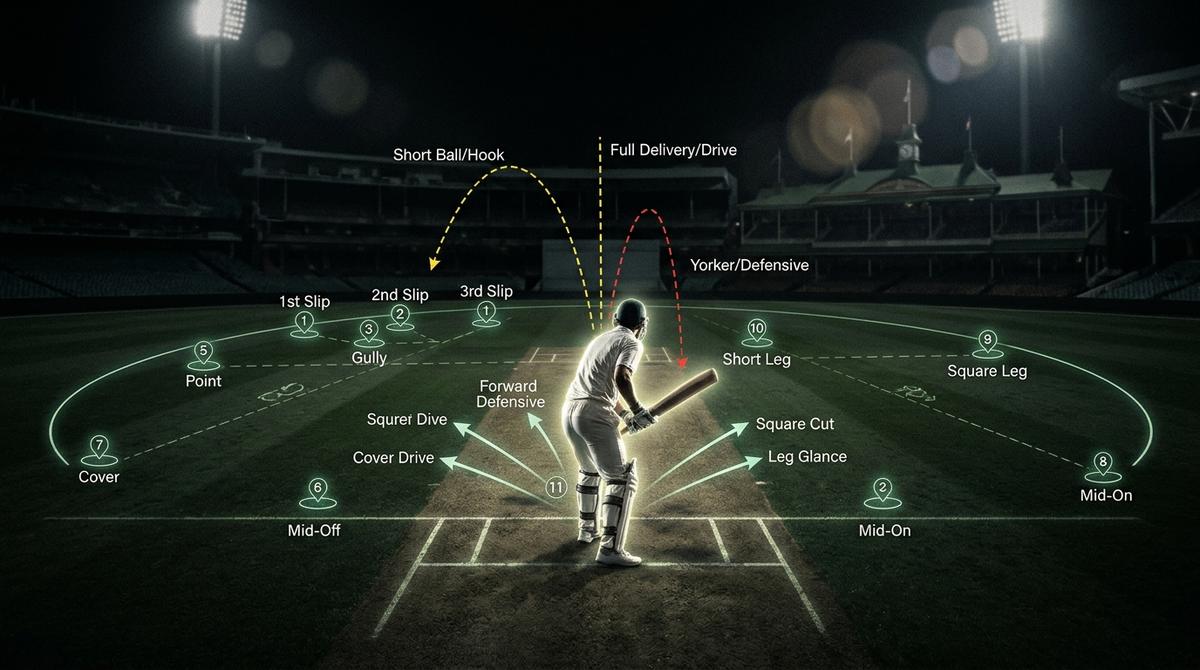
The strategic labyrinth: Unpacking the cerebral demands and crucial field placements that define the Number 3 batsman's pivotal role in Test cricket.
The Unsung Architect: Why No.3 Batting Defines Test Dominance
Right, lads and lasses, Captain Cool here, emerging from the tactical trenches of CricPaglu to tackle a topic as timeless as a well-worn leather ball. We talk openers, we wax lyrical about middle-order maestros, but often, the true lynchpin of a Test innings, the cerebral assassin, the strategic fulcrum, is overlooked. I'm talking, of course, about the Number 3 spot. This isn't just a batting position; it's a statement, a philosophy, a bloody blueprint for how your entire innings is going to unfold.
The Strategic Nexus: More Than Just 'The Next Man In'
Think about it. The openers face the shiny new cherry, the ravenous quicks, the slip cordon salivating. Their job is to blunt the attack, take the shine off, survive. And then, often, with the score looking wobblier than a jelly on a trampoline, out strides the Number 3. This isn't an arbitrary entry. This is a deliberate tactical deployment.
- The Early Firefight: If an opener falls quickly, the No.3 is thrust into the fray against a still-potent new ball. They need the technique of an opener, the temperament of a monk, and the foresight of a chess grandmaster. No room for flashy starts; it's about defence, leaving, wearing down the opposition.
- The Consolidation Phase: If the openers have done well, the No.3 often walks in against a slightly older ball, but with the pressure to capitalise on a good start. This requires a different gear – rotating strike, punishing loose deliveries, building partnerships, accelerating without undue risk.
- The Field of Dreams (or Nightmares): The No.3 fundamentally alters the captain's field-setting calculus. A defensive No.3 might see fewer slips and more ring fielders. An attacking one might draw in more catching chances. Their presence dictates the flow, forcing bowlers to adjust their lines, lengths, and ultimately, their entire game plan. It's a psychological battle as much as a technical one.
The Archetypes of Brilliance: Crafting the Innings
Over the decades, we've seen various interpretations of the Number 3 role, each legendary in its own right.
The Wall: Unyielding Resolve
Some Number 3s are built like fortresses, their primary objective to blunt, to absorb, to wear down. Take Rahul Dravid, for instance – his unyielding resilience and ability to tire bowlers were legendary. They don't just occupy the crease; they own it, brick by painstaking brick. Their scoring might not be rapid, but their resilience is legendary. They tire bowlers, nullify the new ball, and lay the foundation for others to build upon. Their true value isn't just in the runs they score, but in the time they spend and the opportunities they create for the batsmen to follow. They are the ultimate defensive strategists, forcing the opposition to commit errors out of sheer frustration.
The Aggressor: Shifting the Momentum
Then you have the counter-punchers, the momentum shifters. These aren't reckless slogging merchants; these are calculated aggressors. Think of Ricky Ponting's sheer audacity and dominant presence at the crease. They identify scoring opportunities quicker than a hungry mongoose spots a snake. They take calculated risks, punish anything slightly off-line or length, and rapidly deflate the opposition's morale. Their role is to seize the initiative, transform a precarious position into a dominant one, and put the bowling attack firmly on the back foot. It’s about not just scoring runs, but scoring them at a tempo that dictates the match.
The Modern Hybrid: Adaptive Mastery
Today, the game demands even more. The modern Number 3 often needs to be a chameleon, capable of shifting gears seamlessly. A player like Marnus Labuschagne exemplifies this – one session, they might be stonewalling against a hostile spell. The next, they're accelerating to set up a declaration. This adaptability, this mastery of multiple approaches, is what separates the merely good from the truly great in the contemporary game. It's not about being one or the other, but being both, at precisely the right moment.
Beyond Runs: The Intangibles of Influence
The Number 3's contribution transcends mere statistics. They are often the calm voice at the non-striker's end, advising, strategizing, steadying nerves. They are the conduit between the top order and the middle, often setting the tone for the entire innings. Their presence in the dressing room, their technical insights, their leadership – these are immeasurable assets that bolster team confidence and cohesion. They don't just score; they lead by example, often in the crucible of intense pressure.
The Ultimate Test of Temperament
Ultimately, the Number 3 spot is the ultimate psychological and technical examination in Test cricket. It demands an unparalleled blend of skill, patience, aggression, and tactical nous. It’s a role for those who thrive under pressure, who understand the rhythm of a five-day game, and who possess the intellectual capacity to dissect and dismantle opposition strategies one delivery at a time. It's a masterclass in controlled aggression and unwavering resilience.
So, next time you watch a Test, pay extra attention to that player walking out at Number 3. They're not just a batsman; they're the architect, the strategist, the quiet force dictating the very pulse of the game. And that, my friends, is Captain Cool's undeniable truth. Over and out.